
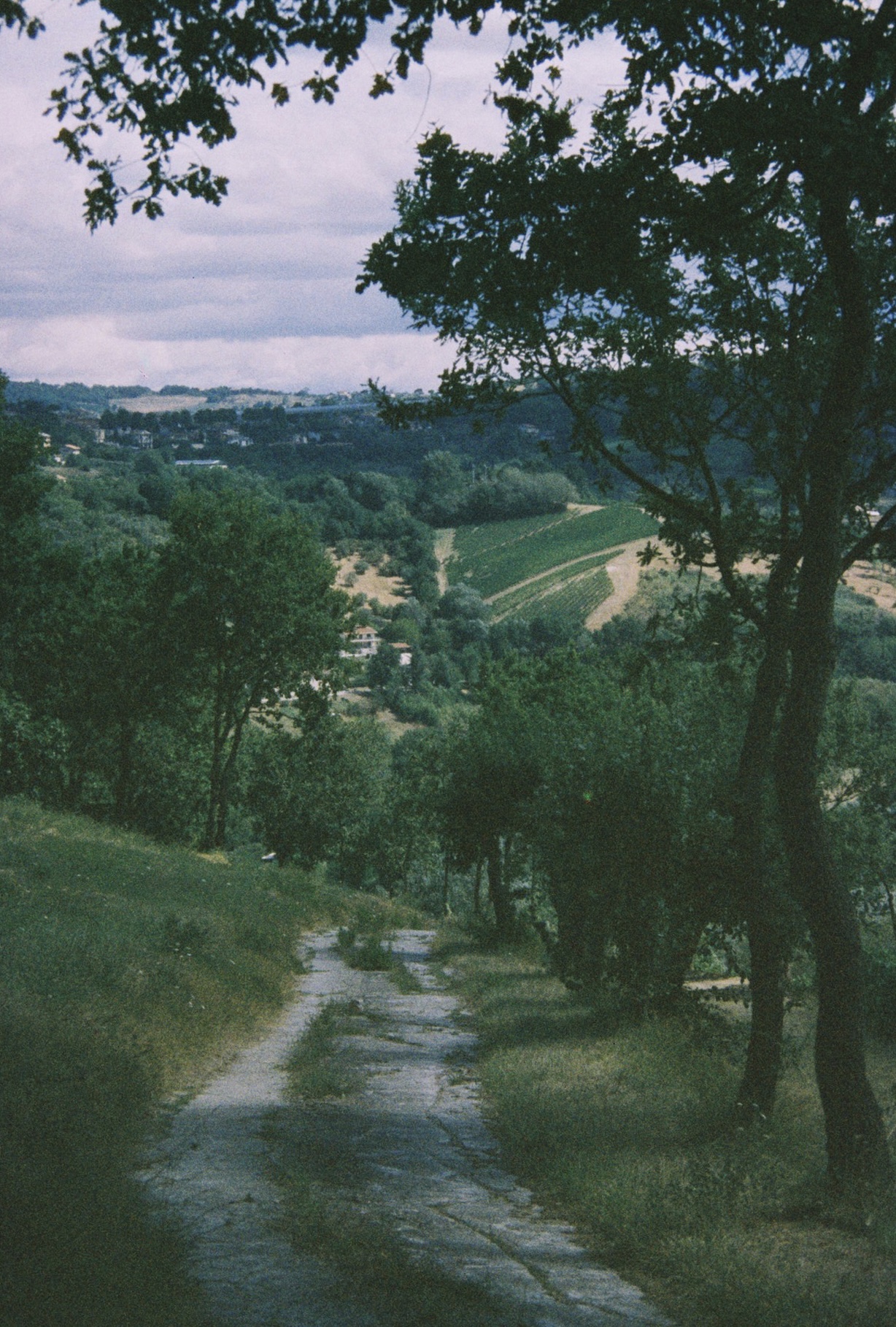
How would you improve your community?
How would I improve my community if I had complete power to do so? According to Hegel, any attempt to restructure culture must begin with the question of how processes of recognition can be brought about. These processes are not merely social; they are equally logical processes embedded in language, as well as restructuring dynamics that unfold across the individual, the family, and the state.
I will refrain from offering purely empiricist responses here—how boring—yet it is undeniable that the age of AI has transformed many of our assumptions about what it means to ameliorate our communities. We no longer seem to be dealing solely with subjects behind actions or words who can be held accountable. Instead, we are confronted with something like real “unmoved movers” in the Aristotelian sense: AI systems that act without appearing to be grounded in intention in the same way human agents are.
Perhaps we should resist the temptation to become cynical or to believe in ghosts again. And yet, it does seem that we are living in an era of disenchantment. But what does disenchantment mean? According to Max Weber:
“The increasing intellectualization and rationalization do not therefore indicate an increasing general knowledge of the conditions under which one lives. Rather, they signify something else: the knowledge or belief that, if one only wished, one could at any time learn it; that there are, in principle, no mysterious incalculable forces at work, but rather that all things can—in principle—be mastered through calculation. This, however, means: the disenchantment of the world.”
If we are indeed in an era of rationalisation, then we may have failed to recognise that spirituality need not be reducible to religion. Moreover, as some contemporary thinkers argue, even the very idea of disenchantment may itself be a myth. In The Myth of Disenchantment, Jason Josephson-Storm writes:
“But this assertion of loss relies on the assumption that reason once ruled or turned into its opposite. Yet this event never occurred. It too is a myth.”
To claim that we inhabit a disenchanted world is already to presuppose that there once existed a fully enchanted one. In doing so, we risk reproducing a narrative that mythologises both past and present. Against this, it may be useful to turn to the transcendentalist Henry David Thoreau and reconsider what it means to be a sensible human being in an age of increasingly opaque transparency. Thoreau, known for his reflections on nature and spirituality, insists on a form of grounding that does not transcend the world but remains within it. In Walden, he writes:
“Heaven is under our feet as well as over our heads.”
This suggests a double grounding, not unlike a refusal of a purely transcendent or purely immanent framework. In our present moment, perhaps what we are experiencing is not simply disenchantment, but a kind of double disenchantment: a loss not only of metaphysical certainty, but also of meaningful engagement with the conditions of life itself.
What is required, then, is a mode of thinking that avoids both the sterility of rigid rationalism and the regression into superstition. It also requires individuals that are taught not only to be intelligible and rational beings but to be increasingly in touch with their sensibilities and be able to ground their nervous systems back to reality. Such thinking must acknowledge that poetics is implicated in our understanding of both life and nature, while resisting the temptation to fall back into mythologies that merely repeat old narratives.
If I were to help my community, I would not begin with abstract prescriptions. Rather, I would seek to cultivate forms of expression. I would help people learn to articulate themselves in ways that might otherwise remain unavailable to them, to both disenchant and re-enchant their language without allowing it to fall into empty conservatism or superficial liberalism. This would involve encouraging a movement away from generalities about how things ought to be, and toward a more particular articulation of how reality is actually experienced.
At the same time, I recognise that such reflections alone are insufficient. Change cannot be imposed discursively from above. Instead, it must be enacted in practice. For me, this has meant slowing down, expanding my sphere of perception, and attempting to act ethically in immediate and concrete ways. It has meant identifying my own superstitions and recognising where I fail to act. It has meant engaging in dialogue with friends and family, shifting the question from where I might change my community to where I can become the change that my community already calls for.